World Sport Enters a New Phase as Asian Games Close With Major Esports and Traditional-Sport Milestones
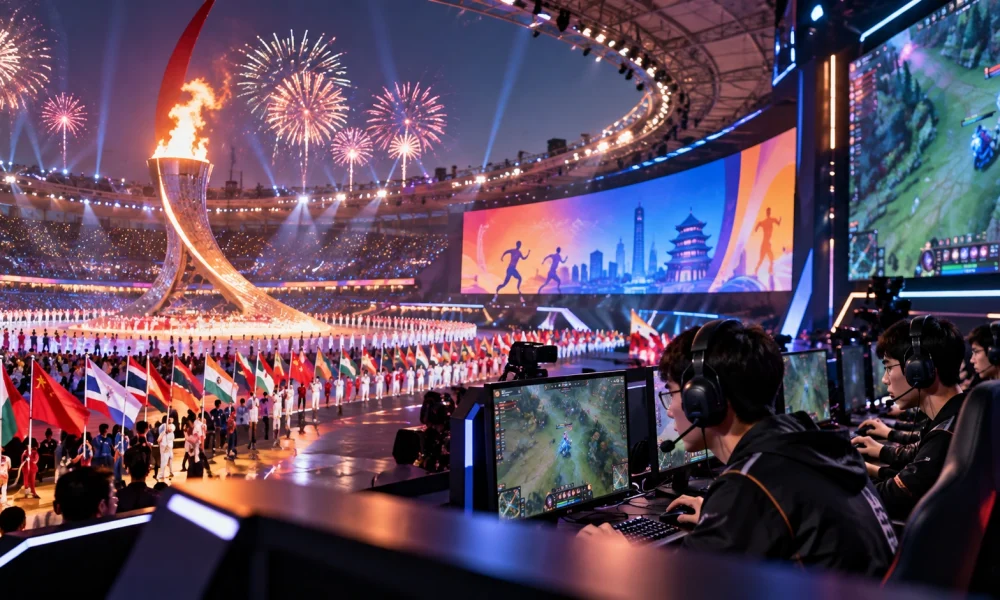
The 2026 Asian Games have concluded in Aichi-Nagoya with strong performances across both traditional sports and esports, highlighting how the sporting calendar is becoming increasingly connected to digital competition.
South Korea finished the esports programme with five medals across nine events, while Uzbekistan won the chess team competition on home territory in Samarkand. Almost 400 teams from more than 190 countries participated in the chess competition.
Esports continues to gain institutional recognition
The inclusion of esports at major multi-sport events represents one of the most important structural changes in international sport.
Competitive gaming now operates through organised leagues, national teams, professional clubs and global tournaments.
The Asian Games have helped accelerate that institutional development.
Traditional sports remain central
At the same time, the wider Asian Games programme demonstrates the continuing strength of traditional sports.
Athletics, swimming, gymnastics, combat sports and team competitions continue to attract the majority of participants and spectators.
The growth of esports therefore does not replace conventional sports. It adds another layer to the international sporting economy.
Gaming becomes a global media product
Professional esports is increasingly organised around major media events.
Streaming platforms allow fans to watch competitions from anywhere, while sponsors can target audiences across multiple countries.
This gives esports a commercial structure closer to professional sport than traditional gaming entertainment.
The next generation of athletes is changing
The growth of esports also changes the definition of athletic performance.
Reaction speed, strategic decision-making, coordination and concentration are central to many competitive games.
At the same time, professional players operate under demanding training schedules and increasingly specialised coaching structures.
Sport is becoming more diverse
The latest international competitions show that the global sports industry is expanding beyond traditional boundaries.
Chess, esports, women’s competitions, new formats and hybrid events are all attracting larger audiences.
For organisers and broadcasters, this creates more opportunities but also greater competition for attention.
The 2026 Asian Games provide another example of how the international sports ecosystem is evolving, with digital competition now increasingly integrated into the mainstream sporting calendar.