How international summits like the G7, G20 and BRICS actually differ
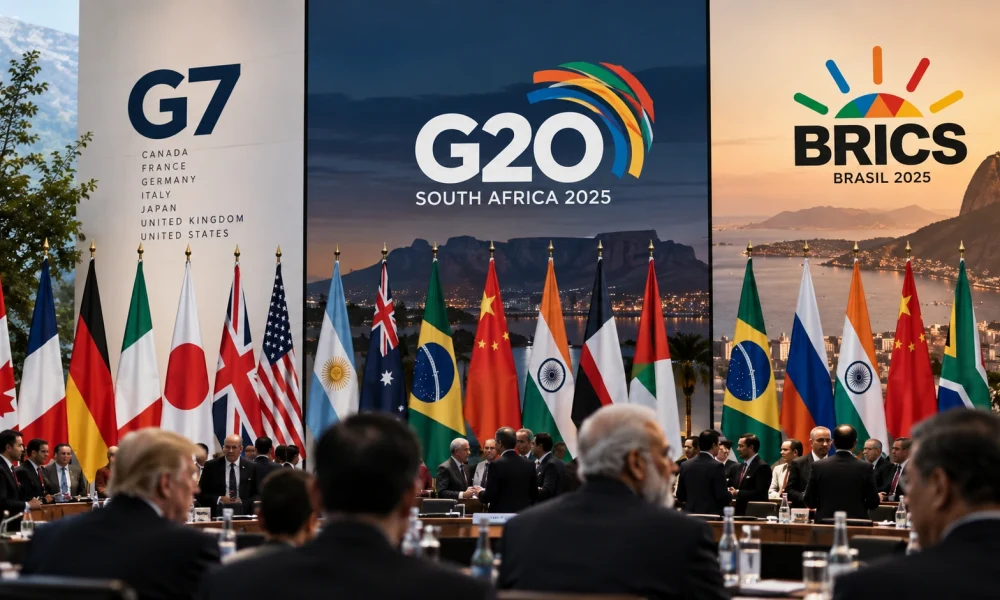
International summits like the G7, G20 and BRICS get discussed together in news coverage, but each represents a distinct grouping of countries with different membership criteria, historical origins and areas of focus, despite the general public perception that they’re roughly interchangeable venues for world leaders to meet.
The G7 consists of seven of the world’s advanced economies, meeting to coordinate policy on economic and security issues among a relatively small, historically aligned group of countries. The G20 includes a much broader set of 19 individual countries plus the European Union and African Union, representing a wider mix of advanced and emerging economies, reflecting its origin as a forum specifically created to include major emerging economies in global economic governance discussions after the G7 was seen as too narrow.
BRICS, originally Brazil, Russia, India, China and South Africa, represents a grouping of major emerging economies that has expanded its membership in recent years, positioning itself partly as an alternative or complement to Western-led international economic institutions, though its members hold genuinely varied and sometimes competing foreign policy positions on many issues.
None of these groupings has binding legal authority over member states; their outcomes typically take the form of joint statements, coordinated commitments or agreements that individual member governments then choose how to implement domestically, rather than enforceable international law.
None of this requires specialized political science training to follow, just a bit of context that rarely gets spelled out clearly in day-to-day news coverage, which is part of why these distinctions get glossed over even in otherwise thorough reporting.
It’s a small piece of civic knowledge, but one that makes following political news considerably easier to interpret accurately, well beyond what its modest complexity would suggest on its own.
This distinction rarely comes up in casual political conversation, but it explains a lot about why the same news event can look so different depending on which country’s institutional structure is actually involved, once someone looks past the surface-level headline.