How the body’s stress response actually works, and why chronic stress differs from acute stress
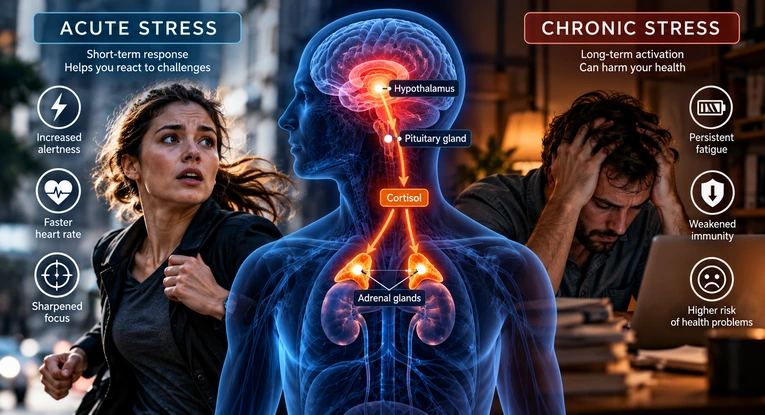
The body’s stress response, often called fight-or-flight, evolved as a short-term survival mechanism: a surge of cortisol and adrenaline sharpens focus, increases heart rate, and redirects blood flow toward muscles, all genuinely useful for responding to an immediate physical threat that resolves within minutes.
Chronic stress activates the same physiological system, but without the resolution that acute stress naturally has, since modern stressors, a demanding job, financial pressure, relationship conflict, often persist for weeks or months rather than minutes. The body wasn’t designed to sustain elevated cortisol for that long, and the consequences of that mismatch show up across multiple systems: impaired immune function, disrupted sleep, elevated blood pressure, and increased risk of anxiety and depression.
Because chronic stress is fundamentally a mismatch between an ancient physiological response and a modern, ongoing trigger, the most effective interventions tend to target the nervous system’s ability to return to a calm baseline state, rather than eliminating stress triggers entirely, which often isn’t realistically possible.
Regular physical activity, deliberate breathing exercises, and consistent sleep all support that return-to-baseline capacity more reliably than avoiding stressful situations altogether, which is rarely a fully achievable strategy in a normal working life.
None of this requires medical expertise, just a bit of deliberate attention applied consistently, which tends to matter more than any single dramatic change attempted once and abandoned within weeks.
It’s a small piece of practical health knowledge, but one that tends to compound quietly over months, shaping daily wellbeing more than its modest complexity would suggest on its own.
Building this into an ordinary routine, rather than treating it as an occasional effort, tends to produce more consistent results than relying on willpower alone during any single moment.
It rarely feels urgent, but it tends to matter more than it seems, especially over the long run.