How in-play betting changed the way people watch sports
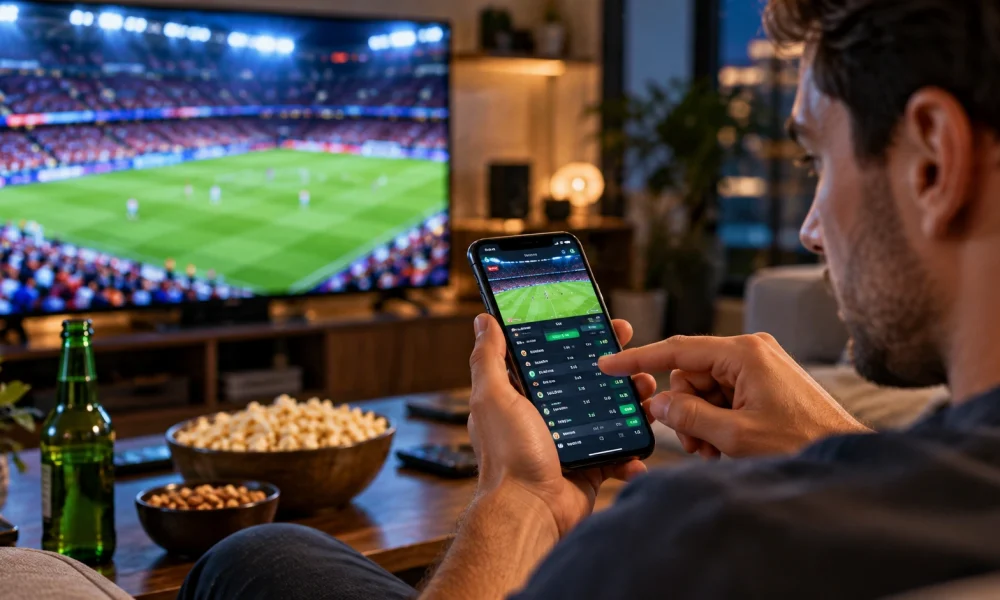
In-play betting, also called live betting, lets people place wagers on a sporting event after it has already started, with odds updating in real time as the action unfolds — a goal, a card, a change in momentum can all shift the numbers within seconds. It’s become one of the fastest-growing corners of sports betting, and for many bettors it’s changed how a match is actually watched, turning attention toward small in-game moments rather than only the final result.
The technology behind it relies on a mix of live data feeds and, increasingly, computer vision systems that track player and ball movement to update odds faster than a human trader realistically could during a fast-moving passage of play. That speed is also why in-play markets tend to carry a larger margin for the operator than pre-match bets: pricing risk correctly in real time, with far less time to react to new information, is simply a harder problem to solve accurately.
For casual viewers, in-play betting can add a layer of engagement to matches that might otherwise feel one-sided or low-stakes by the second half. For anyone prone to chasing losses, though, the speed and constant availability of new betting opportunities during a single match is exactly the kind of environment that responsible gambling tools like session time limits are designed to help manage.
None of this is complicated once explained, but it’s exactly the kind of detail that rarely gets spelled out clearly anywhere, which is part of why it’s worth taking a few minutes to understand before it actually matters in practice.
Knowing this doesn’t change the odds or the outcome of any single bet, but it does make the whole experience easier to navigate with realistic expectations, rather than relying on assumptions picked up secondhand.
It’s a small piece of context, but one that tends to make the rest of the experience easier to understand and, ultimately, easier to enjoy on its own terms.