Luxury fashion turns back to spectacle as brands fight to win consumers again.

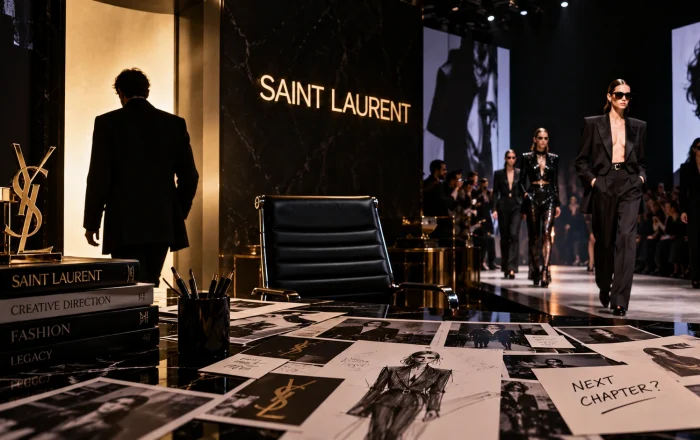
The world’s biggest luxury fashion houses are returning to one of the industry’s oldest tools in the search for growth: the fashion show.
As Milan Fashion Week gets underway and Paris prepares to take centre stage, brands including Gucci, Dior, Louis Vuitton and Chanel are investing heavily in runway presentations, cultural events and carefully constructed brand experiences. The objective is not simply to present new collections. It is to remind consumers why these brands deserve attention at a time when luxury spending is becoming increasingly selective.
Behind the glamour of the September fashion calendar, however, the industry is facing a much more difficult reality.
Luxury consumers are becoming harder to convince, particularly in the middle and upper-middle segments of the market. Inflation, higher travel costs and economic uncertainty are forcing shoppers to reconsider discretionary purchases, while some consumers are increasingly spending their money on experiences, wellness and other forms of personal luxury rather than fashion.
For major fashion houses, the challenge is therefore no longer simply to sell another handbag or pair of shoes. It is to restore desire.
Fashion shows are becoming marketing machines again
The traditional runway show has always been more than a presentation of clothes.
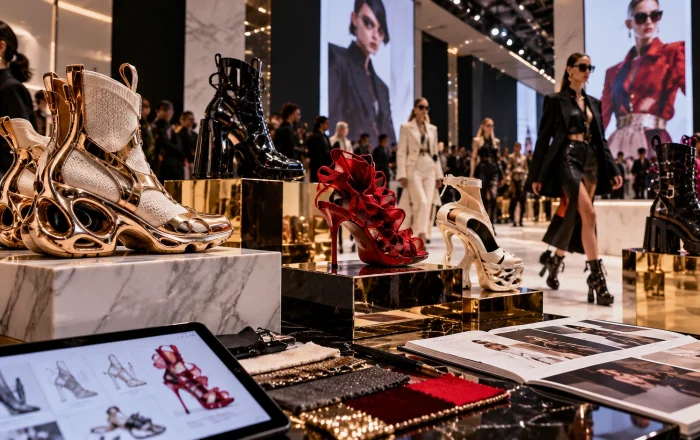
For luxury brands, it is a carefully controlled opportunity to create images that can dominate social media, attract celebrities and influencers, generate press coverage and establish the visual identity of a collection before it reaches stores.
That role has become even more important as brands try to reconnect with consumers.
A major show can generate weeks of content from a single event. Designers can reveal a new creative direction, celebrities provide additional visibility and the location itself can become part of the story.
This is particularly relevant at a time when luxury brands are trying to rebuild their cultural relevance.
The industry spent years relying heavily on price increases and strong demand from wealthy consumers. But the slowdown has exposed the limits of that strategy.
Now, brands are being pushed to offer a stronger reason to buy beyond the label attached to a product.
The luxury slowdown has changed the equation
The pressure on the sector is visible in the performance of some of the industry’s largest groups.
Reuters reported in September that investor concerns had intensified as the recovery in luxury remained elusive. LVMH, the world’s largest luxury group, had lost significant market value during 2026, while Kering was also under pressure as Gucci continued to work through a difficult period.
The weakness is not uniform across the industry.
Some brands continue to attract extremely wealthy customers and maintain strong demand for highly exclusive products. The bigger problem is the broader group of consumers who may be financially comfortable but are no longer automatically willing to spend thousands of euros on fashion.
These customers have more alternatives.
They can travel, invest in wellness, buy technology, spend on restaurants or choose experiences that provide a different type of status and satisfaction.
For luxury fashion, that means competition is no longer limited to other fashion houses.
The middle of the luxury market is under pressure
One of the most important changes in the current cycle is the behaviour of consumers who sit between mass-market shoppers and the ultra-wealthy.
These consumers helped drive the extraordinary growth of luxury fashion in the years following the pandemic. They bought designer handbags, shoes, accessories and clothing as aspirational purchases.
But that group is now becoming more cautious.
Higher everyday costs make luxury purchases easier to postpone. A handbag costing several thousand euros can suddenly look less attractive when consumers are also paying more for travel, food, housing and energy.
The result is a more polarised market.
The wealthiest customers can continue to spend, while more price-sensitive consumers are becoming increasingly selective.
That leaves fashion houses competing intensely for the attention and loyalty of a smaller pool of customers who can afford to spend but want a stronger reason to do so.
Brands are trying to make luxury feel valuable again
The response is increasingly focused on creativity, craftsmanship and storytelling.
The State of Fashion 2026 report from McKinsey and The Business of Fashion describes the current period as a strategic recalibration for luxury. Major brands are reducing their reliance on price-led growth and placing greater emphasis on creativity, craftsmanship, customer experience and brand trust.
That shift is visible on the runway.
Fashion houses are investing in new creative directors, revisiting their archives and placing greater emphasis on the heritage behind their products.
The idea is relatively simple: if consumers are going to pay premium prices, the product needs to feel distinctive and meaningful.
That can involve the materials used, the craftsmanship involved, the history of a design or the cultural relevance of the brand.
The fashion show becomes the place where all of those elements are presented at once.
Burberry offers an example of the new approach
The latest London Fashion Week provided a useful example of how a major luxury brand can combine heritage with contemporary relevance.
Burberry closed the event with a collection created by designer Daniel Lee in collaboration with textile designer Celia Birtwell, whose colourful prints became part of British fashion history.
The brand has been working to reconnect with its British identity while making its products more commercially accessible to a younger generation.
Burberry is also using its heritage outside the runway. An exhibition at the Victoria and Albert Museum dedicated to the history of the trench coat is helping turn one of its most recognisable products into a cultural story rather than simply another item for sale.
The approach illustrates the broader strategy being adopted across the sector.
Luxury brands increasingly want consumers to understand where products come from, why they matter and what makes them different.
London shows that buyers still matter
There are also signs that fashion weeks can still generate meaningful commercial interest.
According to the British Fashion Council, accredited buyer attendance at London Fashion Week in September increased 19% compared with the previous year, while international buyer attendance rose 41%.
The event included 47 catwalk shows, 23 presentations, 10 digital activations and 53 evening events.
The numbers suggest that the fashion week format continues to have commercial value, particularly when it brings designers, retailers and international buyers into the same environment.
But the industry is increasingly aware that attention alone is not enough.
A viral moment on social media does not automatically translate into sales.
Luxury brands need to turn visibility into store visits, customer relationships and eventually purchases.
That is why fashion shows are becoming part of a much broader commercial strategy.
The cost of creating desire
There is a financial risk involved.
Major fashion shows can cost millions of euros to stage, particularly when brands use historic locations, elaborate sets, large production teams, celebrity guests and extensive hospitality programmes.
Reuters reported that some luxury houses can spend up to around €10 million on an individual show, while brands are also investing in stores, exclusive experiences and other forms of customer engagement.
For a company facing slower sales, that creates a difficult calculation.
The show needs to generate enough attention and commercial value to justify the expense.
The traditional argument is that the runway itself is not the product. It is marketing infrastructure designed to support everything that follows.
But when consumers are cutting back, every marketing investment faces greater scrutiny.
Experiences are becoming part of the product
Another important shift is the growing importance of experience.
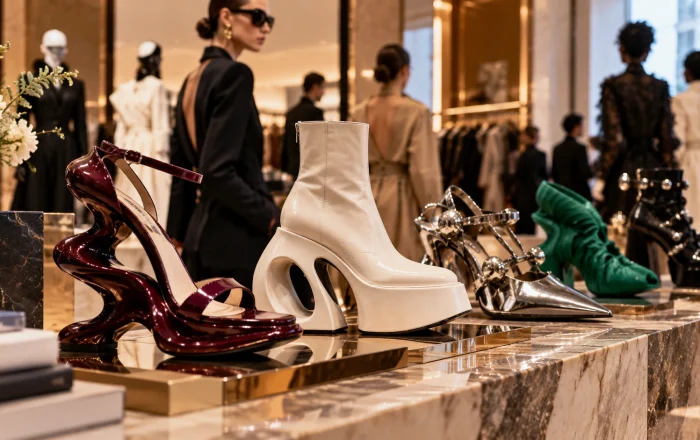
Luxury brands are increasingly creating events that extend beyond the runway, including exhibitions, private shopping experiences, cultural partnerships, dinners and immersive installations.
The strategy reflects a broader change in how consumers define luxury.
A product can still be important, but the experience surrounding it can influence how valuable the purchase feels.
This is particularly relevant to younger consumers, who often discover brands through culture, music, social media and celebrity rather than traditional fashion advertising.
A successful luxury house therefore needs to operate simultaneously as a fashion company, cultural brand and entertainment platform.
The challenge is doing that without making the brand feel too accessible or losing the sense of exclusivity that supports premium pricing.
Creativity is becoming a business strategy
The return of the big fashion show is ultimately about more than spectacle.
Luxury brands need to convince consumers that their products remain culturally relevant and worth the premium.
That is why the appointment of new creative directors has become so important. According to McKinsey and The Business of Fashion, nine of the 15 largest luxury brands appointed new creative directors during the 12 months leading up to September 2025.
These changes are designed to generate fresh creative energy while reconnecting brands with their heritage.
The commercial test is whether that creativity can translate into stronger demand.
A successful collection needs to do more than attract attention for a few days. It needs to influence what consumers want to wear, what products retailers order and what customers are willing to pay for.
Luxury fashion enters a more demanding era
The current fashion season therefore arrives at a critical moment for the luxury industry.
The runway lights are brighter than ever, but the audience is more difficult to persuade.
Consumers are questioning high prices, choosing more carefully between purchases and increasingly looking for experiences, quality and authenticity rather than simply a recognisable logo.
For the biggest fashion houses, the response is a return to the fundamentals of luxury: creativity, craftsmanship, exclusivity and storytelling.
The strategy is visible in Milan and will become even more apparent in Paris, where the industry’s biggest names will compete not only for buyers but for cultural attention.
The success of these shows will ultimately be measured beyond the runway.
The real question is whether a spectacular presentation can turn into renewed desire, stronger customer relationships and actual purchases.
For an industry that has spent years increasing prices, that may be the most important challenge of the next phase: convincing consumers that luxury is worth wanting again.
Sources: Reuters, McKinsey & Company, The Business of Fashion, British Fashion Council, Vogue