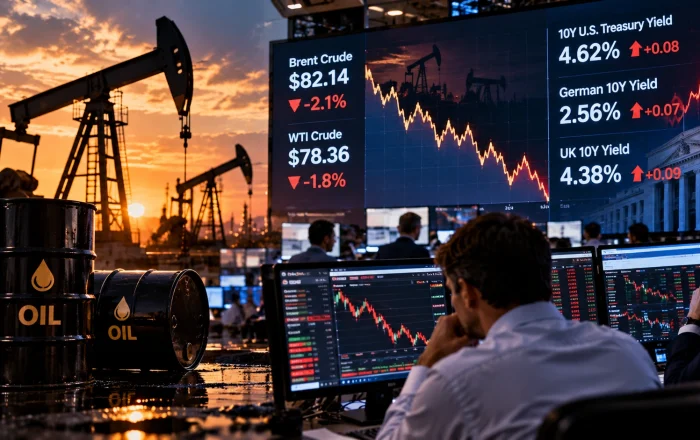
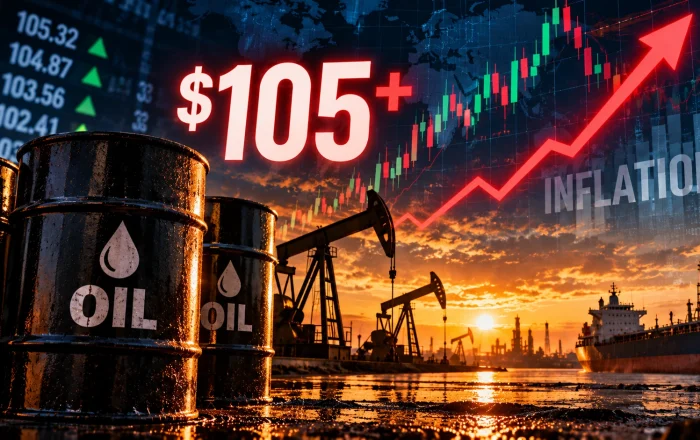
Inflation fears are back: markets brace for higher rates as energy costs keep pressure on prices.
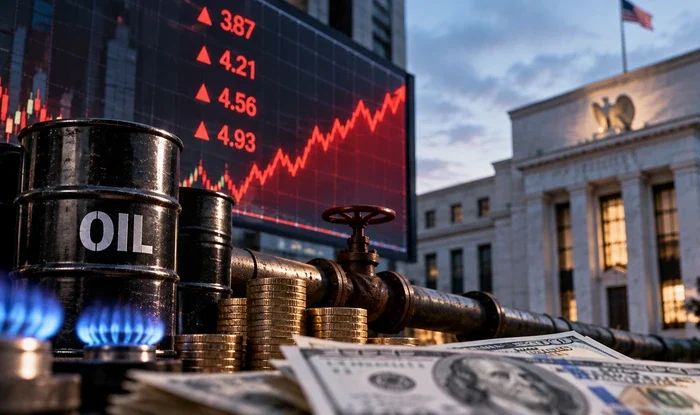
The global inflation story is changing again.
After months in which investors had increasingly focused on the possibility of lower interest rates, financial markets are now preparing for a more complicated environment. Energy prices remain elevated, demand in several major economies is proving resilient, and central bankers are warning that inflation could take longer to return to target.
The shift was particularly visible in the United States last week, where several Federal Reserve officials argued that interest rates may need to rise further if price pressures fail to ease.
St. Louis Fed President Alberto Musalem said on September 21 that additional rate increases were likely to be necessary to bring inflation under control. He pointed to strong demand, higher import prices and commodity costs as sources of continued pressure.
His comments came only days after the Federal Reserve raised its benchmark interest rate by 25 basis points to a range of 3.75% to 4%.
That decision marked the first US rate increase since 2023 and signalled a significant change in the direction of monetary policy.
The bigger question for markets is whether the September move will be an isolated adjustment or the beginning of a longer period of tighter monetary policy.
The inflation problem has become more complicated
One reason the current situation is difficult for central banks is that inflation is no longer being driven by a single factor.
The US Personal Consumption Expenditures Price Index, the Federal Reserve’s preferred inflation measure, rose to 3.7% in July, well above the central bank’s 2% target.
For much of the previous inflation cycle, central banks could focus on demand, wages and supply chain disruptions.
The latest pressure is broader.
Energy prices have risen sharply as geopolitical tensions in the Middle East have disrupted expectations around global supply. Higher oil and gas prices feed directly into household energy bills and transport costs, but their impact does not stop there.
Fuel is an input into almost every part of the economy.
Higher transportation costs can raise the price of food and manufactured goods. Airlines face higher operating costs. Logistics companies pay more to move products. Businesses may then pass some of those increases on to customers.
That creates a difficult environment for central banks because raising interest rates does not directly produce more oil or gas.
Instead, higher borrowing costs are used to slow demand and prevent a temporary energy shock from becoming a broader inflation problem.
The Fed is facing pressure from both sides
The Federal Reserve’s challenge is particularly delicate.
The US economy remains relatively strong, with domestic demand continuing to support activity. That resilience is positive from a growth perspective, but it can also make it harder to bring inflation back to the central bank’s target.
Chicago Fed President Austan Goolsbee said last week that US inflation may now be influenced by strong demand in addition to the tariff and energy shocks seen over the past 18 months. He suggested that this could require a faster pace of rate increases.
The implication for investors is important.
If inflation remains stubbornly high while economic activity continues to hold up, the Federal Reserve has more room to keep monetary policy restrictive.
That would be very different from the environment investors had expected when the focus was on a gradual return toward lower rates.
Bond markets are already reacting
The change in expectations has been particularly visible in government bond markets.
US Treasury yields rose sharply during the week as investors increased their expectations for further rate increases. On Friday, the benchmark 10 year Treasury yield briefly reached 5.23%, its highest level since 2007, before retreating as oil prices fell and hopes of progress in Middle East diplomacy increased.
Bond yields matter far beyond the bond market itself.
They influence mortgage rates, corporate borrowing costs and the valuation of financial assets around the world.
When government bond yields rise, companies generally have to pay more to borrow. Investors also tend to demand higher returns from riskier assets.
That can put pressure on highly valued technology companies, property markets and businesses that rely heavily on debt financing.
It also changes the relative attractiveness of cash and fixed income investments.
In other words, a higher for longer interest rate environment can gradually reshape investment decisions across the economy.
Europe is facing the same problem
The inflation issue is not limited to the United States.
European policymakers are also dealing with renewed energy related price pressures.
ECB Chief Economist Philip Lane said last week that the current energy shock could last longer than previously expected. He expects inflation in the euro area to remain affected by the second wave of higher oil and gas prices, although he sees price growth eventually returning toward the ECB’s target from the middle of 2027.
The European Central Bank has already responded to the changing environment.
It raised interest rates earlier in September, citing the renewed inflationary pressure created by energy prices. The move was the ECB’s second rate increase of the year.
Financial institutions are now considering whether another increase could be necessary later in the year.
Bank of America Global Research, for example, said last week that it expects the ECB to raise rates by another 25 basis points in December, pointing to the impact of higher energy prices on euro area inflation.
That expectation is not a guarantee of what the ECB will do. It is, however, a useful indication of how the market’s thinking has changed.
Oil remains the key variable
Energy prices have become the central variable in the inflation outlook.
Oil prices moved above $100 a barrel earlier in September as the conflict in the Middle East raised concerns about production and transportation routes.
By the end of last week, oil had retreated as markets responded to diplomatic developments and the possibility of improved supply conditions. Brent crude was nevertheless still close to the $100 threshold.
For central banks, the distinction between a temporary oil shock and a persistent inflation problem is critical.
If energy prices rise and then quickly fall again, the effect on annual inflation can eventually fade.
If high energy costs remain in place for months, however, businesses and households have more time to adjust their prices and expectations.
That is when a temporary shock can become much harder to eliminate.
Gold is feeling the pressure too
Gold, traditionally viewed as a hedge against inflation and uncertainty, has also reacted to the changing interest rate outlook.
Prices moved lower during the week as investors increased their expectations for further US rate increases. Higher interest rates can make gold less attractive because the metal does not generate interest income.
The relationship is not always straightforward.
Gold can benefit from geopolitical uncertainty and concerns about currencies or government finances. But when yields rise sharply, investors have another reason to allocate money toward interest bearing assets.
That tension is currently visible across commodity and financial markets.
The risk markets are watching: stagflation
The most difficult scenario would be one in which inflation remains high while economic growth slows.
That combination, commonly referred to as stagflation, is particularly uncomfortable for central banks.
If growth weakens but prices continue to rise, policymakers have fewer attractive options. Cutting interest rates could support economic activity but risk extending inflation. Raising rates could contain prices but further weaken demand.
Reuters has noted that the combination of higher energy costs and rising global borrowing costs is pushing markets closer to such a scenario, although economic growth has so far remained relatively resilient.
The distinction is important. Markets are not necessarily facing a repeat of the stagflation episodes of the 1970s. The current economic structure is different, and the eventual path will depend heavily on energy prices, consumer demand and the duration of geopolitical disruptions.
But the possibility is once again part of the financial conversation.
What it means for investors and businesses
The immediate consequence is a more uncertain interest rate outlook.
For investors, the return of inflation pressure means that assumptions built around steadily falling rates need to be reconsidered.
For companies, higher borrowing costs can make expansion, acquisitions and refinancing more expensive.
For households, the effects can appear through mortgages, consumer loans, energy bills and the prices of everyday goods.
And for governments, higher bond yields increase the cost of servicing public debt at precisely the moment when many countries are already running large fiscal deficits.
The next few months will therefore depend heavily on whether energy prices stabilise and whether inflation expectations remain contained.
Central banks have made it clear that they are willing to keep rates higher if necessary.
The market is now trying to determine how much higher they may need to go and how long they may have to stay there.
For the first time in several months, the central question is no longer when the global rate cutting cycle will accelerate.
It is whether policymakers will have to tighten financial conditions again to prevent a new inflation wave from becoming entrenched.
Sources: Reuters, Federal Reserve, European Central Bank and market data cited in the article.