Why brake fluid needs replacing even though it isn’t used up like oil
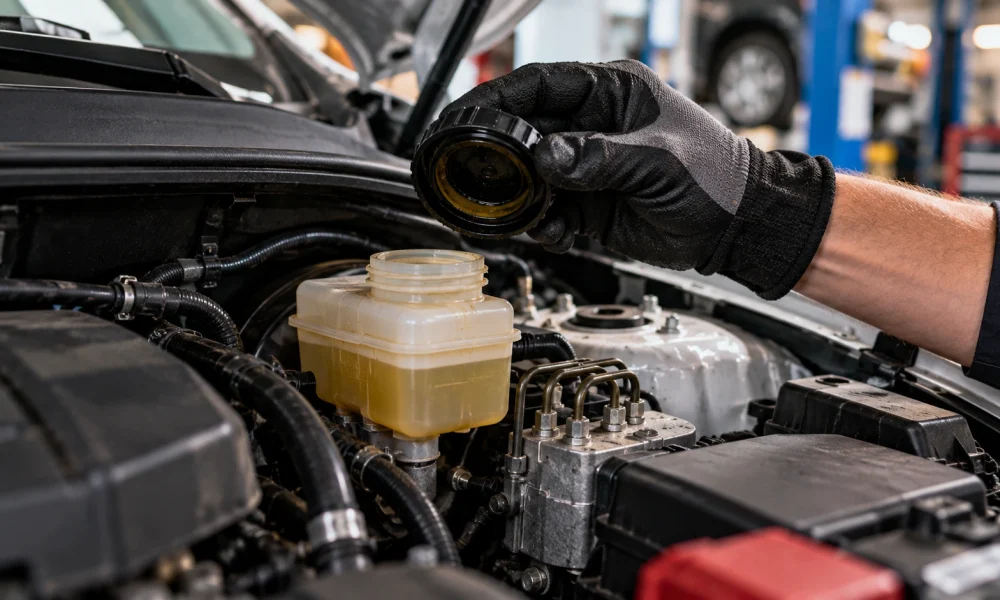
Brake fluid doesn’t get consumed through normal use the way engine oil does, which leads many drivers to assume it never needs changing at all, but brake fluid degrades chemically over time in a way that has real, safety-relevant consequences regardless of how many miles have actually been driven.
Most brake fluid is hygroscopic, meaning it gradually absorbs moisture from the air over time, even in a sealed system, through microscopic permeability in brake lines and seals. That absorbed moisture lowers the fluid’s boiling point significantly, which matters because brake fluid needs to withstand genuinely high temperatures generated by friction during hard or repeated braking without boiling, since boiled brake fluid creates compressible gas bubbles in the brake lines that can cause a dangerously soft, spongy brake pedal precisely when strong braking is needed most.
Most manufacturers recommend brake fluid replacement on a time-based interval, typically every two to three years, rather than a mileage-based one, specifically because the degradation is driven by time and moisture exposure rather than actual driving distance, which is why brake fluid age is worth tracking separately from a vehicle’s overall mileage.
None of this requires mechanical expertise, just a bit of deliberate attention on a regular schedule, which tends to matter more than most drivers assume until a problem shows up unexpectedly.
Getting this right doesn’t take much time or money compared to the cost of ignoring it, which is exactly why it’s worth building into a routine rather than waiting for a warning sign.
It’s a small piece of practical car knowledge, but one that tends to save real money and hassle down the line, well beyond what its modest complexity would suggest.
None of it guarantees a trouble-free car by itself, but it removes one more variable from ownership costs that already have enough that can go wrong unexpectedly.