Washington Redirects Military Aid as the Trump Administration Places Greater Emphasis on Latin America
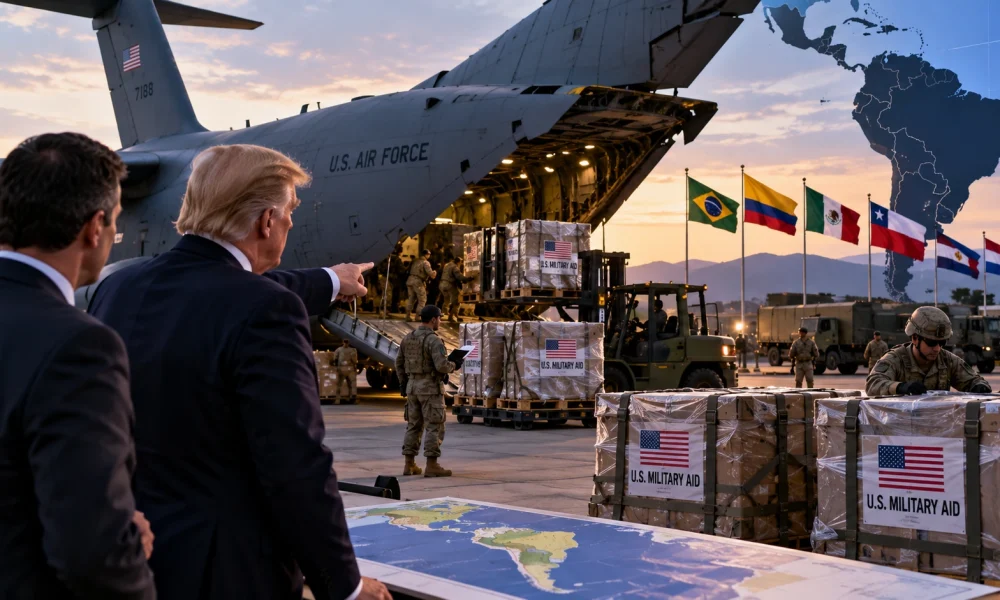
The Trump administration has redirected tens of millions of dollars in US military assistance originally intended for European and Middle Eastern partners toward Latin American countries, marking another sign of Washington’s changing foreign policy priorities.
According to reporting by The Washington Post, around $52 million in military aid was redirected from countries including Slovakia, North Macedonia, Tunisia and Iraq toward Panama, Peru, Ecuador and Colombia. The administration said the move reflects its emphasis on the Western Hemisphere and the fight against organised crime and drug trafficking.
The decision has generated criticism from members of Congress who argue that some of the funds were originally approved for specific foreign policy objectives and should not have been redirected without clearer justification.
A different approach to US engagement abroad
The administration has increasingly emphasised the Western Hemisphere as a strategic priority.
The shift comes as Washington is also reassessing its long-standing security commitments in Europe. The United States remains a major contributor to NATO and continues to work with European allies, but the Trump administration has repeatedly questioned the distribution of defence responsibilities within the alliance.
The latest aid decision adds another dimension to that debate.
For European governments, the issue is particularly sensitive because the continent is still dealing with the security consequences of Russia’s war in Ukraine. Any reduction or redirection of US assistance is therefore being examined in the context of broader questions about Washington’s long-term role in European security.
Latin America becomes more prominent
The countries receiving the redirected assistance have different security needs, but the administration has linked the policy to its broader campaign against drug trafficking and organised crime.
Panama has particular strategic importance because of the Panama Canal, while Colombia, Ecuador and Peru are major regional partners dealing with drug production, trafficking networks and domestic security challenges.
The administration has argued that strengthening security cooperation in the region can address problems that also affect the United States, including illegal drug flows and organised criminal networks.
Congressional objections
The transfer of funds has also raised questions about the balance of power between the executive branch and Congress.
According to The Washington Post, lawmakers including Senator Jeanne Shaheen and Representative Gregory Meeks questioned whether the redirection complied with restrictions attached to the original appropriations. The State Department defended the move as consistent with the administration’s foreign policy priorities.
The dispute illustrates a broader issue facing US foreign policy: how much flexibility the administration should have in reallocating funds approved by Congress for specific international objectives.
Europe watches the broader strategy
The decision comes after a period of intense diplomatic activity involving the United States, Europe, Ukraine, Russia and China.
President Donald Trump has sought to redefine Washington’s role internationally, while European governments have been discussing how to strengthen their own defence capabilities.
The debate is not limited to military aid. Energy security, trade, NATO spending and support for Ukraine have all become part of the wider discussion over the future of transatlantic relations.
For European countries, the central question is how Washington’s changing priorities will affect the long-term structure of the security relationship.
For Latin American governments, meanwhile, the new approach creates opportunities for closer cooperation with the United States in areas ranging from defence to counter-narcotics operations.
The redirection of $52 million is relatively small compared with the overall US foreign assistance budget, but it is politically significant because it illustrates how the administration is reallocating attention and resources between regions.