Paramount launches $7.5 billion debt raise as it moves to finance Warner Bros. takeover.
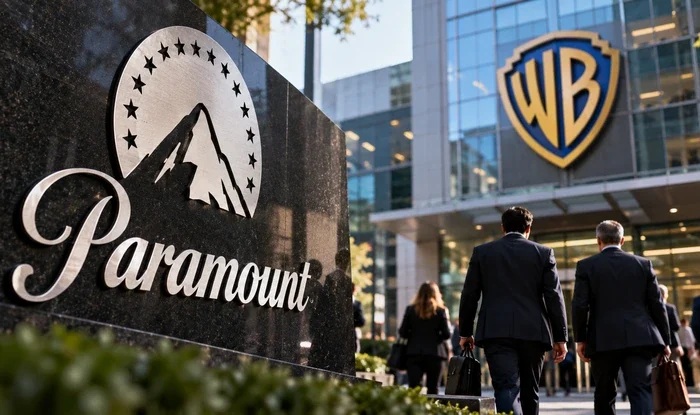
Paramount Skydance has launched a new $7.5 billion debt offering as it moves to finance its acquisition of Warner Bros. Discovery, adding another major piece to the funding structure behind one of the largest media transactions in recent years.
The company announced on September 24 that it had begun syndicating a proposed senior secured Term B loan with a principal amount of $7.5 billion. The transaction remains subject to market and other conditions.
The new borrowing is part of a much larger financing package. Paramount said it plans to raise approximately $44.4 billion in additional secured debt, on top of the new $7.5 billion facility and financing arrangements already announced. The proceeds, together with cash on hand and previously committed equity financing, will be used to fund the acquisition and repay some existing debt.
The scale of the financing highlights the financial challenge facing Paramount as it prepares to absorb Warner Bros. Discovery.
A $110 billion transaction
Paramount and Warner Bros. Discovery agreed earlier this year on a deal that values WBD at approximately $81 billion in equity value and $110 billion on an enterprise-value basis.
Under the agreement, Paramount is paying $31 in cash for each outstanding WBD share. The transaction is backed by $47 billion of new equity, while the remainder is being financed through debt and other sources of funding.
The acquisition brings together two major Hollywood businesses and a large portfolio of film, television and streaming assets.
Warner Bros. Discovery owns brands and properties including Warner Bros., HBO, HBO Max, CNN, Discovery and a large collection of entertainment franchises. Paramount brings Paramount Pictures, CBS, Nickelodeon and Paramount+, among other assets.
The combined group will therefore have a substantially larger content library and a much broader distribution network than either company had independently.
For Paramount, however, the challenge begins after the transaction closes: integrating those businesses while carrying a considerably larger debt load.
The debt burden will be substantial
According to Reuters, the combined company is expected to have roughly $80 billion in debt after the transaction is completed.
That makes the financing structure one of the most important parts of the deal.
Paramount’s original transaction announcement said the combined company was expected to have a net debt-to-EBITDA ratio of approximately 4.3 times on a fully synergized basis at closing, with a stated objective of moving toward investment-grade credit metrics within three years.
The company’s argument is that the scale of the combined business should eventually generate significant efficiencies.
Paramount has estimated more than $6 billion in synergies from areas including technology integration, procurement, corporate operations and the consolidation of real estate and other infrastructure.
The company also expects to combine streaming technology platforms and migrate the businesses toward a more unified technology and enterprise systems structure.
Those savings will matter.
A larger company can potentially spread technology, distribution and corporate costs across a much bigger revenue base. But achieving those savings requires substantial upfront investment and a complex integration process.
The legal battle has finally cleared the way
The timing of the debt raise is significant.
Only a few days before the financing announcement, Paramount reached settlements with California and other US states as well as the Writers Guild of America, removing a major legal obstacle to the acquisition.
The $110 billion transaction had faced opposition from a coalition of 12 state attorneys general, who had sought to block the merger on competition grounds.
The settlement allowed the deal to move forward without requiring Paramount to sell major assets such as CNN.
Instead, Paramount accepted a number of conditions.
The combined company must release at least 30 theatrical films a year for the first two years and increase that number to 32 in subsequent years. Paramount also agreed to increase US film production spending by $300 million annually compared with 2025 levels over a five-year period.
There are financial penalties if the company fails to meet some of these commitments.
The settlement also includes provisions concerning the editorial independence of CBS and CNN and separate negotiations with television distributors.
The Writers Guild of America separately resolved its legal challenge.
With those cases settled, the transaction was no longer facing the same domestic legal uncertainty that had delayed its completion.
Why the financing matters now
For investors, the $7.5 billion Term B facility is important for another reason: it provides a clearer picture of how Paramount intends to balance growth ambitions with the financial burden created by the acquisition.
Debt financing has become a central feature of major media transactions as companies attempt to acquire valuable intellectual property and streaming businesses without funding the entire purchase price through equity.
The problem is that the media industry itself is going through a structural transition.
Traditional television audiences continue to migrate toward streaming, while streaming businesses require significant investment in content and technology. At the same time, investors have become increasingly focused on profitability rather than simply subscriber growth.
That means the newly enlarged Paramount will have to demonstrate that the scale of the Warner Bros. Discovery acquisition can translate into actual financial improvements.
The company is betting that a combined business will be able to eliminate overlapping costs, strengthen its streaming offering and make better use of one of the largest entertainment libraries in the world.
A much bigger streaming competitor
One of the most consequential elements of the deal is the combination of Paramount+ and HBO Max.
Both services have spent years competing for subscribers against Netflix, Disney+, Amazon Prime Video and other global platforms.
Individually, Paramount+ and HBO Max have had to compete with much larger rivals for consumer attention and content budgets.
Combining them gives Paramount access to a significantly broader portfolio.
The new company will control franchises ranging from Harry Potter and DC to Mission: Impossible, Top Gun, Game of Thrones and SpongeBob SquarePants.
That creates opportunities for bundling, cross-promotion and potentially a larger global streaming platform.
But it also creates a complicated integration problem.
Combining two streaming businesses involves more than merging content libraries. Technology platforms, subscriber databases, advertising systems, pricing structures and distribution agreements all have to be coordinated.
Paramount has specifically identified technology integration as one of the areas where it expects to generate savings.
Hollywood is entering another era of consolidation
The transaction reflects a broader trend in the global entertainment industry.
For decades, Hollywood was dominated by a relatively stable group of major studios and television networks. The arrival of streaming disrupted that structure, forcing traditional media companies to spend heavily to develop their own direct-to-consumer platforms.
The financial pressure created by that transition has made scale increasingly important.
Paramount’s acquisition of WBD is therefore not simply a deal between two entertainment companies. It is an attempt to create a media group large enough to compete with the biggest global technology and entertainment platforms.
The question is whether that scale will ultimately justify the financial commitment.
Paramount is taking on tens of billions of dollars in additional debt at a time when investors are scrutinizing corporate borrowing more closely. At the same time, the company must spend heavily on content, technology and integration while delivering the cost savings promised to investors.
The $7.5 billion financing announced this week is consequently only one part of a much larger financial equation.
The transaction itself may have cleared its biggest legal hurdles, but the next challenge is arguably more important for Paramount’s long-term strategy: proving that the enlarged company can generate enough cash and efficiencies to support the debt taken on to build it.
For Hollywood, meanwhile, the merger creates a new heavyweight with an unusually broad combination of film studios, television networks, streaming services, news operations and intellectual property.
The deal may have been built through a combination of equity, debt and negotiations with regulators. Its real test, however, will come once the new company has to turn all those assets into a coherent business.
Sources: Paramount Skydance, Reuters, U.S. regulatory filings and Paramount’s transaction disclosures.